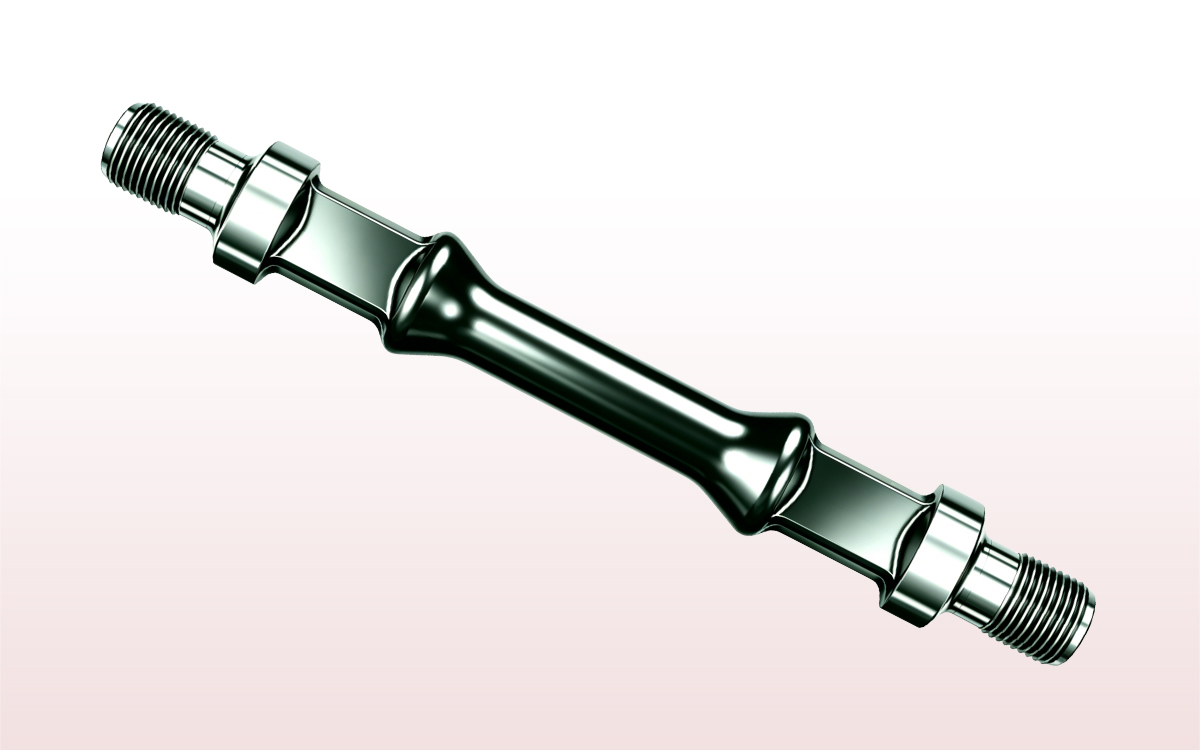
Corrosion-resistant sucker rods are special sucker rods developed for oil well environments with highly corrosive media (such as chloride ions, H₂S, CO₂, high-mineralized formation water, dissolved oxygen, organic acids, etc.). Their core goal is to significantly slow down or prevent corrosion-induced failures while ensuring mechanical performance, extending pump inspection cycles, and reducing fish accidents and maintenance costs caused by corrosion fractures. Among them, material-type corrosion-resistant sucker rods feature the 00Cr12 material series as the flagship product. Verified by corrosion resistance tests, this material exhibits excellent anti-corrosion performance against CO₂, chloride ions, and high-mineralized well fluids, delivering outstanding field downhole application effects and stable reliability.
It has strong resistance to downhole corrosive factors such as CO₂, chloride ions, high salinity, and microorganisms. According to oilfield simulated well condition corrosion tests, the annual corrosion rate is 0.0233~0.0357 mm/a (test data from CNPC Engineering Materials Research Institute Quality Testing Center, under two different high-temperature and high-pressure corrosion conditions for 168 hours). Compared with the annual corrosion rate of 0.7394~0.8565 mm/a for conventional CrMoA materials, the annual corrosion rate of 00Cr12 corrosion-resistant sucker rods is only 1/24~1/31 of that of conventional sucker rods.
Made of 00Cr12 special alloy material, after heat treatment with a reasonable process, it exhibits excellent comprehensive mechanical properties. The tensile strength can reach Grade H, the reduction of area is greater than 45%, the elongation after fracture is ≥10%, and the Charpy impact energy is greater than 120J.
Sucker rods are subjected to complex alternating loads downhole, requiring strict fatigue strength of materials. According to the SY/T5029 fatigue test method, the average fatigue strength of 00Cr12 special alloy sucker rods can exceed 1 million cycles. In extreme fatigue tests, the recorded maximum fatigue life exceeds 5 million cycles, with a continuous operation time of 26 days in a single test.
Conventional products are prone to forming corrosion pits downhole in a short period, severely affecting surface roughness. The corrosion resistance of 00Cr12 material sucker rods allows the surface roughness to be maintained for a long time, greatly improving wear resistance.



Effectively reduces corrosion fractures of the rod string and extends the maintenance-free period of oil wells.

The mechanical properties are no less than those of conventional sucker rods under corrosion-resistant conditions, making it easy for production engineers to select rod strings.

The reasonable sucker rod structure, combined with excellent mechanical properties, gives the product outstanding fatigue resistance.

Corrosion resistance reduces tubing wear, helps extend the service life of the tubing string, increases the maintenance-free period of oil wells, and reduces operating costs.



Scan the QR Code