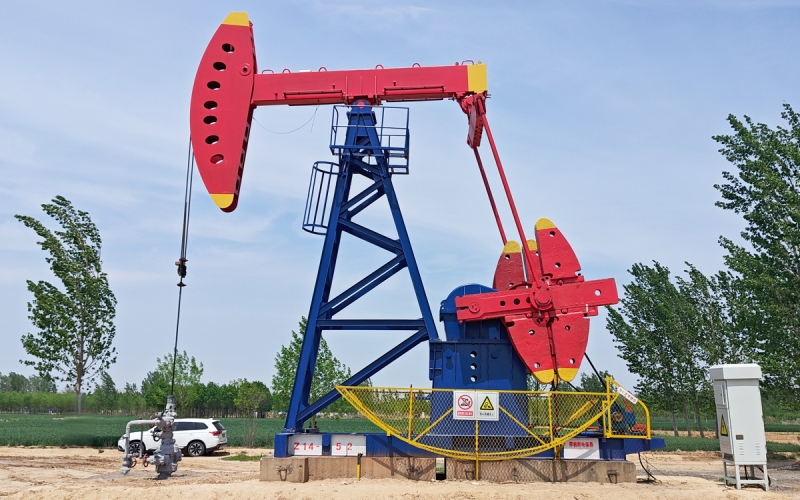
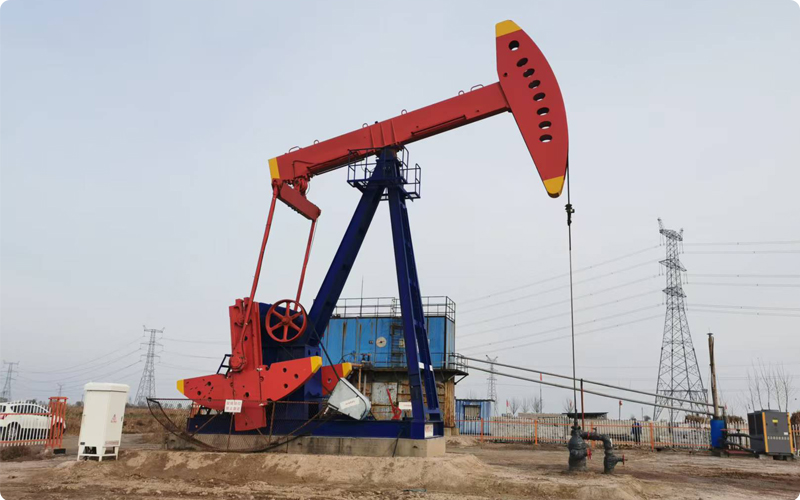
The beam pumping unit is the core surface drive equipment in the mechanical oil production system of oilfields. It uses a crank–connecting rod–beam mechanism to convert the rotary motion of the motor into the reciprocating up-and-down motion of the horsehead, driving the downhole sucker rod and pump to continuously lift underground crude oil to the surface. The pumping unit is equipped with a balancing device to reduce peak loads, minimize motor power fluctuations, and improve energy efficiency and operational stability. Its overall structure is robust, the transmission is reliable, and operation and maintenance are straightforward. It can adapt to complex field conditions such as high temperatures, severe cold, sandstorms, etc., and can meet the production requirements of oil wells with varying depths, fluid production rates, and oil properties. As a key lifting equipment in petroleum extraction, it is widely used in oilfields.
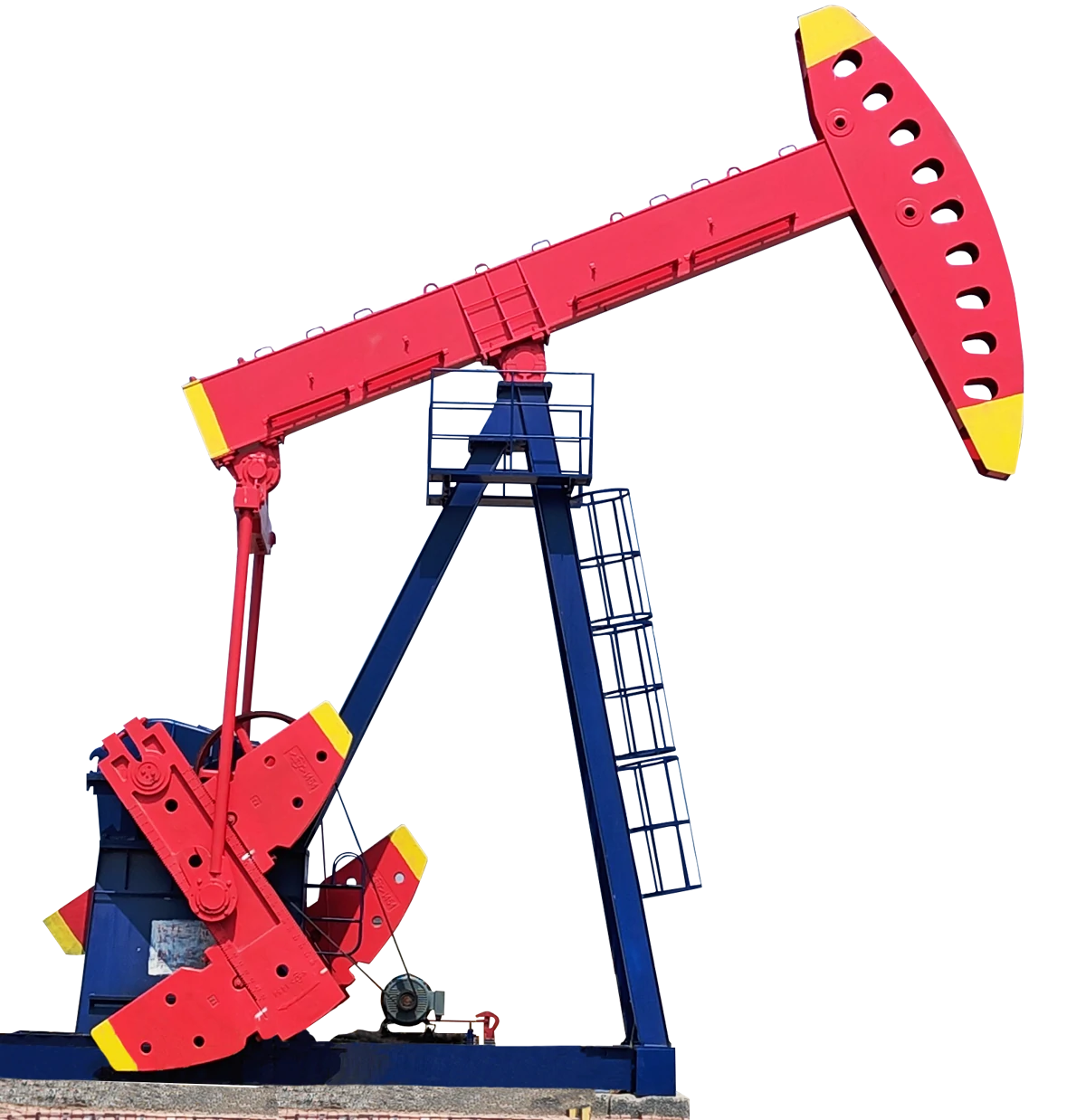
The beam pumping unit adopts a stable tower-type or three-leg support structure and relies on a crank-connecting rod-beam mechanism to convert motion. The electric motor serves as the power source. After speed reduction and torque increase by the reducer, the motor drives the crank to rotate. The crank, via the connecting rod, pushes the beam to oscillate back and forth around the support shaft. The horsehead moves up and down with the beam, driving the downhole sucker rod string and the pump plunger to complete the pumping cycle, thereby lifting the crude oil from the formation to the surface.
Converts the rotary motion of the electric motor into the reciprocating linear motion of the horsehead. The motion conversion principle is mature and the transmission is direct.
A stable tower-type or three-leg support structure, with the support, beam and base as the main body. It features high structural strength and good stability, capable of withstanding large alternating loads and impacts.
Mostly uses crank balance, beam balance or compound balance to balance the reciprocating load of the sucker rod string and reduce the peak power of the motor.
The complete machine has a compact structure, with strong parts commonality and interchangeability. This facilitates manufacturing, installation, maintenance, and replacement, and enables the unit to adapt to complex field conditions in oilfields.


Uses a mature crank–connecting rod–beam mechanism with few components and direct transmission, resulting in a low failure rate and long-term stable operation.

High rigidity and impact resistance; capable of continuous operation under complex field conditions such as high temperature, severe cold, sandstorms, and saline‑alkali environments.

Mature technology and high standardization; easy to procure and repair; low requirements for on‑site operating and maintenance personnel.

Sturdy overall structure with no complex electronic controls or precision components; long service life, suitable for long‑term continuous oilfield production.
The company has been deeply engaged in the R&D and manufacturing of pumping units for many years, possessing comprehensive design and large-scale production capabilities for beam pumping units and large reducers. It has held API 11E certification for nearly 20 years, ensuring excellent product quality.
The product features an extremely low failure rate, strong parts commonality, long overhaul intervals, and a service life far exceeding the industry average. With significant advantages in overall operating costs, it effectively helps oilfields reduce costs, improve efficiency, stabilize production, and increase output.
A after-sales technical service system covering core oilfield areas has been established. During equipment operation, a professional technical team provides fast-response after-sales maintenance services, helping to ensure long-term, high-efficiency operation of the equipment.

Scan the QR Code